Providing the guidance needed for formulation, handling, and quality control of photolabile drugs, Photostability of Drugs and Drug Formulations, Second Edition explores the significance of new information on drug photoreactivity in a pharmaceutical context. Completely revised and updated, with chapter authors drawn from an international panel of experts, the book supplies the background necessary for planning standardized photochemical stability studies as a part of drug development and formulation work. It contains comprehensive coverage of the physical and chemical aspects of drug photoreactivity, formulation, stability testing, and drug design/discovery in one resource. The contents have been reorganized to focus on the standardization of photostability testing of drug substances and products, in vitro photoreactivity screening of drugs, and various aspects of the formulation of photoreactive substances. The information on in vitro screening of drug photoreactivity is of great relevance for scientists who are developing and validating a set of testing protocols to address photosafety. Discussing kinetic and chemical aspects of drug photodecomposition as well as the practical problems frequently encountered in photochemical stability testing, this book helps you design a test protocol and interpret the results. Features · Assists non-experts in this field design a test protocol and interpret the results · Covers in vitro and in vivo aspects of interactions between drugs and light · Explores the kinetic and chemical aspects of drug photodecomposition · Discusses the problems frequently encountered in photochemical stability testing · Provides guidance on how to address photosafety assessments and labeling requirements of potentially photoreactive drugs · Highlights the practical implications of drug photodecomposition from a pharmaceutical viewpoint · Offers specific guidance in photostability testing and screening of drug photoreactivity.
Showing posts with label Pharmaceutical Technology. Show all posts
Friday, June 24, 2011
Tuesday, June 14, 2011
Handbook of Pharmaceutical Manufacturing Formulations, Second Edition: (Six-Volume Set)
Sarfaraz K. Niazi, "Handbook of Pharmaceutical Manufacturing Formulations, Second Edition: (Six-Volume Set)"
Informa Healthcare | 2009 | ISBN: 1420081063, 1420081306, 1420081284, 1420081268, 1420081233, 1420081187, 1420081160 | 2094 pages | PDF | 16,2 MB
Includes:
Volume 1: Compressed Solid Products
Volume 2: Uncompressed Solid Products
Volume 3: Liquid Products
Volume 4: Semisolid Products
Volume 5: Over-the-Counter Products
Volume 6: Sterile Products
An authoritative and practical guide to the art and science of formulating drugs.
With thoroughly revised and expanded content, this Second Edition six-volume set compiles volumes from FDA New Drug Applications, patent applications, and other sources of generic and proprietary formulations to cover the broad spectrum of issues concerning drug manufacturing.
A must-have collection for pharmaceutical manufacturers, educational institutions, and regulatory authorities, this set is an excellent platform for drug companies to benchmark their products and for generic companies to formulate drugs coming off patent.
As the largest reference on pharmaceutical formulations, this handbook also provides guidelines on how to file aNDAs in the shortest possible time, helping pharmaceutical companies to cut costs in the areas of pharmaceutical research and development.
Divided conveniently into two parts—regulatory and manufacturing guidelines, and formulations—each volume in the set covers:
* cGMP compliance
* pre-approval inspections
* stability and bioequivalence testing
* packaging commodity development
* common difficulties in formulating drugs
* changes to aNDAs
Volume 1: Compressed Solid Products
Volume 2: Uncompressed Solid Products
Volume 3: Liquid Products
Volume 4: Semisolid Products
Volume 5: Over-the-Counter Products
Volume 6: Sterile Products
An authoritative and practical guide to the art and science of formulating drugs.
With thoroughly revised and expanded content, this Second Edition six-volume set compiles volumes from FDA New Drug Applications, patent applications, and other sources of generic and proprietary formulations to cover the broad spectrum of issues concerning drug manufacturing.
A must-have collection for pharmaceutical manufacturers, educational institutions, and regulatory authorities, this set is an excellent platform for drug companies to benchmark their products and for generic companies to formulate drugs coming off patent.
As the largest reference on pharmaceutical formulations, this handbook also provides guidelines on how to file aNDAs in the shortest possible time, helping pharmaceutical companies to cut costs in the areas of pharmaceutical research and development.
Divided conveniently into two parts—regulatory and manufacturing guidelines, and formulations—each volume in the set covers:
* cGMP compliance
* pre-approval inspections
* stability and bioequivalence testing
* packaging commodity development
* common difficulties in formulating drugs
* changes to aNDAs
Labels:
Pharma eBook,
Pharmaceutical Technology
Sunday, May 29, 2011
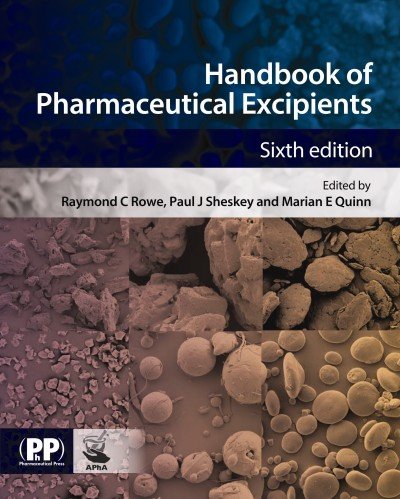
Handbook of Pharmaceutical Excipients, 6th Edition (Rowe, Handbook of Pharmaceutical Excipients)
Publisher: Pharmaceutical Press
Number Of Pages: 917
Publication Date: 2009-07-31
ISBN-10 / ASIN: 0853697922
ISBN-13 / EAN: 9780853697923
Number Of Pages: 917
Publication Date: 2009-07-31
ISBN-10 / ASIN: 0853697922
ISBN-13 / EAN: 9780853697923
Product Description:
"The Handbook of Pharmaceutical Excipients" is internationally recognised as the authoritative source of information on pharmaceutical excipients. "The Handbook of Pharmaceutical Excipients" is a comprehensive guide to the uses, properties and safety of pharmaceutical excipients and is an essential reference for those involved in the development, production, control or regulation of pharmaceutical preparations. The handbook collects together essential data on the physical properties of excipients as well as providing information on their safe use and potential toxicity. All monographs are also thoroughly cross-referenced and indexed to allow their identification by chemical, non-proprietary or trade names.
Summary: It’ all right !
Rating: 5
Rating: 5
It is a very usefull book for pharmaceutical specialists. It is a good which
help us very much.
help us very much.
Summary: Handbook of Pharmaceutical Excipients
Rating: 5
Rating: 5
This is an excellent book that contains every phamaceutical excipient that I have ever had the need to know about. I work for a dietary supplement manufacturer and we quite often get calls from customers that want to know all about all those "other ingredients" that are listed on product cartons. The book has a section for each excipient and each excipient has the following sections: Nonproprietary Names, Synonyms, Chemical Name and CAS Registry Number, Empirical Formula and Molecular Weight, Structural Formula, Functional Category, Applications in Pharmaceutical Formulation or Technology, Description, Pharmacopeial Specifications, Typical Properties, stability and Storage Conditions, Incompatibilities, Method of Manufacture, Safety, Handling Precautions, Regulatory Status, Pharmacopeias, Related Substances, Comments, Specific References, General References, and Authors. While I have a background in Biology, I found several of the sections to be easy to understand by several of our employees that do not have a science background. While, still, there was highly technical/scientific information as well. Each excipient’s information is contained in 2-4 pages. The book is arranged alphabetically which makes finding information easy. In addition, it contains an index that is very well constructed. For example: If you are looking for an Emulsifying Agent, the index lists all the excipients that can be used for that purpose. I can’t say enough how easy this book is to use. Its information is pared down to the essential text, and is chocked full of graphs, charts and microscopic photos of the excipients.
Wednesday, May 25, 2011
Pharmaceutical Powder Compaction Technology
This unique reference examines the modern pharmaceutical compacting techniques used to form tablets out of powders—describing the physical structure of pharmaceutical compacts, the bonding phenomena that occur during powder compaction, and the compression mechanisms of pharmaceutical particles.
Contents
- Interparticulate Bonding Characteristics of Pharmaceutical Compacts
- Interparticulate Attraction Mechanisms
- The Importance of Intermolecular Bonding Forces and the Concept of Bonding Surface Area
- Characterization of the Compression Process
- Porosity-Pressure Functions
- Force-Displacement and Network Measurements
- Viscoelastic Models
- Application of Percolation Theory and Fractal Geometry to Tablet Compaction
- Characterization of Compact Properties
- Mechanical Strength
- Tablet Surface Area
- Rationale for and the Measurement of Tableting Indices
- Material Properties of Importance for Powder Volume Reduction and Compact Strength
- Particle Dimensions
- Mechanical Properties
- Granule Properties
- Modeling the Compression Behavior of Particle Assemblies from the Mechanical Properties of Individual Particles
- Compaction Properties of Excipients and Powder Mixtures
- Materials for Direct Compaction
- Compaction Properties of Binary Mixtures
- Lubricant Sensitivity
- The Development and Optimization of Tablet Formulations Using Mathematical Methods
Labels:
Pharma eBook,
Pharmaceutical Technology
Saturday, May 21, 2011
Modeling and Simulation of Capsules and Biological Cells
In the past three decades, considerable progress has been made in the mathematical analysis, modeling, and simulation of the fluid dynamics of liquid capsules and biological cells. In this book, leaders in the field explore topics related to the modeling and numerical simulation of capsule fluid dynamics and cell biomechanics. Providing an outstanding overview of the subject, the authors include results from their own ongoing research. The book covers the fundamentals of cell and membrane mechanics, modeling hydrodynamics under various flow conditions, and drop and bubble dynamics associated with temperature variations and surfactant transport. The clear exposition and stand-alone format provided by Modeling and Simulation of Capsules and Biological Cells puts state-of-the-art information in a single source that will undoubtedly motivate further work in this developing field.
Labels:
Pharma eBook,
Pharmaceutical Technology
Friday, May 20, 2011
Thursday, April 28, 2011
Enzyme Technologies for Pharmaceutical and Biotechnological Applications
A review of enzyme function in human and animal health, this book covers basic principles and applications in antibiotic biosynthesis, biocatalysis, and screening and assay optimization, as well as new and emerging technologies in the biotechnological and pharmaceutical industries.It offers real-world examples of timely laboratory, pharmaceutical and manufacturing processes, including large-scale applications of enzyme manipulations.
Packaging Closures and Sealing Systems
Packaging closures have undergone much evolution and development in recent years, and their functions have grown beyond simply allowing easy access and reclosing, This volume examines the technologies relevant to packaging closures and sealing systems. It features chapters contributed by top professionals in the packaging industry. To date, this is the only book dedicated to this important area. It is organized according to the various types of packagingmetal, glass, plastics, flexible, and composite containers. One chapter explores child resistant mechanisms, tamper evidence, and openability; the book also includes a chapter on quality assessment.
Parenteral Quality Control: Sterility, Pyrogen, Particulate, and Patkage Integrity Testing: Third Edition
Providing a well-written and easy-to-read review of the subject, this reference describes the most recent breakthroughs in the validation and execution of testing schemes for parenteral quality control. Emphasize testing methodologies for the evaluation of package integrity, finished product contamination, and sterility, the book is a guide to testing and assuring that products for injecting drugs are sterile, free from pyrogenicity, and free from particulate matter. The authors highlight methods that meet US and European standards, explain regulatory requirements and harmonization between various authorities, and review trends and recent developments in technology.
Labels:
Parenterals,
Pharma eBook,
Pharmaceutical Technology
Peptide-Based Drug Design: Methods and Protocols
Due to their high specificity and low toxicity profile, peptides have once again become central to the development of new drugs. In Peptide-Based Drug Design: Methods and Protocols, expert researchers provide a handbook which offers a selection of research and production tools suitable for transforming a promising protein fragment or stand-alone native peptide into a pharmaceutically acceptable composition. The volume delves into contemporary, cutting-edge subjects such as hit isolation and target validation, computer-aided design, sequence modifications to satisfy pharmacologists, in vivo stability and imaging, and the actual production of difficult sequences. Written in the highly successful Methods in Molecular Biology™ series format, chapters include readily reproducible, step-by-step laboratory protocols, lists of materials, and the Notes section, which highlights tips on troubleshooting and avoiding known pitfalls. Comprehensive and up-to-date, Peptide-Based Drug Design: Methods and Protocols shows its subject to be an independent science on the rise, and provides scientists with a clear, concise guide for continuing this vital research.
Labels:
Pharma eBook,
Pharmaceutical Technology
Pharmaceutical Dosage Forms: Tablets, Third Edition
Pharmaceutical Dosage Forms: Tablets, Volume 1 examines the fundamental physical and chemical processes that the different unit oprations use, and then applies this knowledge to the discussion of the varying unit operations and processes.
Tuesday, April 26, 2011
Flavours and Fragrances
This book is an introduction to the fascinating world of aroma chemicals, essential oils, fragrances and flavour compositions for the food, cosmetics and pharmaceutical industry. The present state-of-the-art technology, the future use of resources and biotechnological approaches for the production of the respective chemical compounds are described. A large section is devoted to the description of the renewable resources of flavours: spice plants, fruits from moderate to tropical climates, vegetables, fermented and heated plants. Analytical methods, such as gas chromatography coupled to human or electronic noses or to a mass spectrometer, are outlined and consumer trends, legal and safety aspects are described. Novel renewable resources come from biotechnology. Enzymes, for example, bio-transform cheap substrates to produce flavours de novo; plant cells in culture may serve as a rich resource of genes coding for metabolic activities in transgenic producers. The book will be of great interest to scientists and engineers in the food, flavour, fragrance and pharmaceutical industries and all respective researchers in academia.
Tuesday, April 5, 2011
Clean-in-Place for Biopharmaceutical Processes
An invaluable source instruction on the principles, instrumentation, design, implementation, operation, and maintenance of an effective clean-in-place system (CIP), this guide illustrates best practices and successful applications of CIP in both pharmaceutical and biotechnology facilities. Offering reader-friendly descriptions of the various types of equipment and materials found in typical CIP processes, Clean-In-Place For Biopharmaceutical Processes will take the guess-work out of CIP development, and illustrate all one needs to know for the establishment and optimal functioning of a CIP system.
Wednesday, March 30, 2011
Topical Absorption of Dermatological Products
Contains current methods of analysis for new formulations of cosmetics, perfumes, creams, and lotions! With contributions from world-renowned experts in the field, Topical Absorption of Dermatological Products summarizes · novel treatments for fungal nail infections · emerging risk assessment procedures for sunscreen products · real-time breath analysis and physiologically based pharmacokinetic modeling (PBPK) for the examination of chemically exposed tissues · the use of micelles, mixed micelles, liposomes, and microemulsions as effective drug delivery systems · modern therapeutic devices for the management of acute, subacute, and chronic steroid-responsive dermatoses Providing state-of-the-art strategies for the control of irritation and infection, Topical Absorption of Dermatological Products is an in-depth source for dermatologists, pharmacists, pharmacologists, cosmetic scientists, biochemists, toxicologists, public health officials, manufacturers of cosmetics and toiletries, and upper-level undergraduate and graduate students in these disciplines.
Nanoparticulate Drug Delivery Systems
Since the advent of analytical techniques and capabilities to measure particle sizes in nanometer ranges, there has been tremendous interest in the use of nanoparticles for more efficient methods of drug delivery. This expertly written guide addresses the scientific methodologies, formulation, processing, applications, recent trends, and emerging technologies in the research of nanoparticulate drug delivery systems (NPDDS). It extensively covers applications of NPDDS, including lipid nanoparticles for dermal applications, nanocarriers for the treatment of restenosis, ocular, central nervous system, and gastrointestinal applications, and use as an adjuvant for vaccine development.
Tuesday, March 29, 2011
Risk-sharing in the Pharmaceutical Industry: The Case of Out-licensing (Contributions to Management Science)
The costs of developing a new drug have reached record levels in the pharmaceutical industry. As any failure of a new drug candidate can lead to significant losses, many pharmaceutical companies are looking for new approaches to reduce their exposure to R and D risks. In this context, the book deals with the topic of out-licensing as a novel form of risk-sharing collaborations. The phenomenon of out-licensing is illustrated by three major case studies of Novartis, Schering and Roche as well as several smaller case studies. In addition, the Noble Prize awarded economic theory of Adverse Selection is applied to analyze the topic theoretically. The gained insights allow identifying the critical parameters of out-licensing collaborations and thereby provide R and D managers with recommendations on how to conclude and manage this type of deals more effectively.
Labels:
Pharma eBook,
Pharmaceutical Technology
Monday, March 28, 2011
Encyclopedia of Pharmaceutical Technology, Third Edition
Presenting authoritative and engaging articles on all aspects of drug development, dosage, manufacturing, and regulation, this Third Edition enables the pharmaceutical specialist and novice alike to keep abreast of developments in this rapidly evolving and highly competitive field. A dependable reference tool and constant companion for years to come, the Third Edition will offer completely new entries that cover critical issues in the field such as the impact of genomics, biotechnology, and implants on drug discovery, targeting, delivery, and formulation. In addition, it will address new regulatory issues, such as the changes in advertising regulations, and emerging FDA procedures.
Pharmaceutical Dosage Forms:Tablets, Vol. 1, 2, 3
Pharmaceutical Dosage Forms: Tablets, Vol. 1
By Herbert Lieberman, Leon Lachman,Joseph B. Schwartz
Publisher: Informa Healthcare
Number Of Pages: 616
Publication Date: 1989-06-05
ISBN-10 / ASIN: 0824780442
ISBN-13 / EAN: 9780824780449
Product Description:
Complete in 3 volumes. Pharmaceutics. 18 Contributors. DNLM: 1. Dosage Forms.
By Herbert Lieberman, Leon Lachman,
Publisher: Informa Healthcare
Number Of Pages: 616
Publication Date: 1989-06-05
ISBN-10 / ASIN: 0824780442
ISBN-13 / EAN: 9780824780449
Product Description:
Complete in 3 volumes. Pharmaceutics. 18 Contributors. DNLM: 1. Dosage Forms.
H.H. Lieberman Associates, Inc., Livingston, New Jersey. 'Tablets' complete in 3 volumes. Pharmaceutical technology. 15 Contributors. DNLM: 1. Dosage forms.
Sunday, March 27, 2011
Protein-Based Films and Coatings
This volume presents the most up-to-date and detailed information available on protein-based biopolymer films and coatings. It provides a comprehensive overview of the design, technology, properties, functionality, and applications of biopolymer films and coatings (edible and inedible) from plant and animal proteins. Both widely commercialized and envisioned applications of protein films are discussed, including hard and soft gelatin capsules, microcapsules, collagen casings, and meat and produce coatings. Expert contributors provide thorough reviews of related interdisciplinary research and extensive lists of references. About the Editor: Aristippos Gennadios, Ph.D. is Senior Manager, Materials Science and Clinical Supplies, Product Development: US and Canada, Banner Pharmacaps Inc. (a Sobel NV Company) in High Point, North Carolina. He received his B.S. in Chemical Engineering from the National Technical University in Athens, Greece, his M.S. in Agricultural Engineering from Clemson University, and his Ph.D. in Agricultural and Biological Systems Engineering from the University of Nebraska in Lincoln. Dr. Gennadios is also Adjunct Associate Professor in the Department of Biological Systems Engineering at the University of Nebraska in Lincoln. He has authored or co-authored over 40 refereed publications and has been granted 2 U.S. patents.
Subscribe to:
Posts (Atom)