Ads 468x60px

Sunday, May 29, 2011

Organic Medicinal,Pharmaceutical Chemistry,Wilson


Wilson & Gisvold’s Textbook of Organic Medicinal and Pharmaceutical Chemistry (Wilson and Gisvold’s Textbook of Organic and Pharmaceutical Chemistry)
By John Block, John M Beale
Publisher: Lippincott Williams & Wilkins
Number Of Pages: 1000
Publication Date: 2003-12-01
ISBN-10 / ASIN: 0781734819
ISBN-13 / EAN: 9780781734813
Book Description:
Oregon State Univ., Corvallis. Blends the chemical and pharmaceutical principles necessary for understanding structure-activity relationships and molecular mechanisms of drug action. Offers new information on emerging trends and advances and the challenges posed by new diseases. Features a new chapter on combinatorial chemistry. Previous edition: c1998. DNLM: Chemistry, Pharmaceutical.

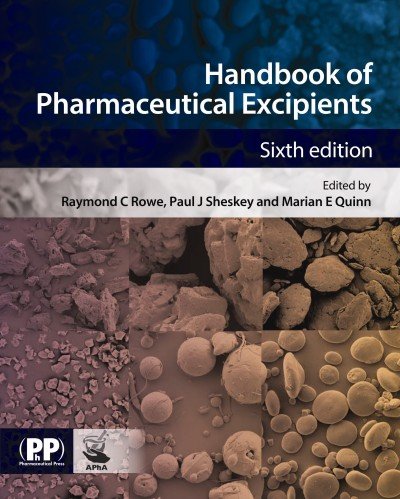
Handbook of Pharmaceutical Excipients, 6th Edition (Rowe, Handbook of Pharmaceutical Excipients)


Publisher: Pharmaceutical Press
Number Of Pages: 917
Publication Date: 2009-07-31
ISBN-10 / ASIN: 0853697922
ISBN-13 / EAN: 9780853697923
Product Description:
"The Handbook of Pharmaceutical Excipients" is internationally recognised as the authoritative source of information on pharmaceutical excipients. "The Handbook of Pharmaceutical Excipients" is a comprehensive guide to the uses, properties and safety of pharmaceutical excipients and is an essential reference for those involved in the development, production, control or regulation of pharmaceutical preparations. The handbook collects together essential data on the physical properties of excipients as well as providing information on their safe use and potential toxicity. All monographs are also thoroughly cross-referenced and indexed to allow their identification by chemical, non-proprietary or trade names.
Summary: It’ all right !
Rating: 5
It is a very usefull book for pharmaceutical specialists. It is a good which
help us very much.
Summary: Handbook of Pharmaceutical Excipients
Rating: 5
This is an excellent book that contains every phamaceutical excipient that I have ever had the need to know about. I work for a dietary supplement manufacturer and we quite often get calls from customers that want to know all about all those "other ingredients" that are listed on product cartons. The book has a section for each excipient and each excipient has the following sections: Nonproprietary Names, Synonyms, Chemical Name and CAS Registry Number, Empirical Formula and Molecular Weight, Structural Formula, Functional Category, Applications in Pharmaceutical Formulation or Technology, Description, Pharmacopeial Specifications, Typical Properties, stability and Storage Conditions, Incompatibilities, Method of Manufacture, Safety, Handling Precautions, Regulatory Status, Pharmacopeias, Related Substances, Comments, Specific References, General References, and Authors. While I have a background in Biology, I found several of the sections to be easy to understand by several of our employees that do not have a science background. While, still, there was highly technical/scientific information as well. Each excipient’s information is contained in 2-4 pages. The book is arranged alphabetically which makes finding information easy. In addition, it contains an index that is very well constructed. For example: If you are looking for an Emulsifying Agent, the index lists all the excipients that can be used for that purpose. I can’t say enough how easy this book is to use. Its information is pared down to the essential text, and is chocked full of graphs, charts and microscopic photos of the excipients.

Wednesday, May 25, 2011

Methamphetamine(Drugs: the Straight Facts)


Methamphetamine (Drugs: the Straight Facts)
By Randi Mehling
Publisher: Chelsea House Publications
Number Of Pages: 128
Publication Date: 2007-11-30
ISBN-10 / ASIN: 0791095320
ISBN-13 / EAN: 9780791095324
Binding: Library Binding 

Pharmaceutical Manufacturing Handbook: Production and Processes

Pharmaceutical Powder Compaction Technology


This unique reference examines the modern pharmaceutical compacting techniques used to form tablets out of powders—describing the physical structure of pharmaceutical compacts, the bonding phenomena that occur during powder compaction, and the compression mechanisms of pharmaceutical particles.
Contents
  1. Interparticulate Bonding Characteristics of Pharmaceutical Compacts
    • Interparticulate Attraction Mechanisms
    • The Importance of Intermolecular Bonding Forces and the Concept of Bonding Surface Area
  2. Characterization of the Compression Process
    • Porosity-Pressure Functions
    • Force-Displacement and Network Measurements
    • Viscoelastic Models
    • Application of Percolation Theory and Fractal Geometry to Tablet Compaction
  3. Characterization of Compact Properties
    • Mechanical Strength
    • Tablet Surface Area
    • Rationale for and the Measurement of Tableting Indices
  4. Material Properties of Importance for Powder Volume Reduction and Compact Strength
    • Particle Dimensions
    • Mechanical Properties
    • Granule Properties
    • Modeling the Compression Behavior of Particle Assemblies from the Mechanical Properties of Individual Particles
  5. Compaction Properties of Excipients and Powder Mixtures
    • Materials for Direct Compaction
    • Compaction Properties of Binary Mixtures
    • Lubricant Sensitivity
    • The Development and Optimization of Tablet Formulations Using Mathematical Methods

Tuesday, May 24, 2011

English for the Pharmaceutical Industry ( Book and Audio)


Michaela Buchler, Kathy Jaehnig, Gloria Matzig, Tanya Weindler, "English for the Pharmaceutical Industry ( Book and Audio)" O..rd U..ty Press Elt | 2010 | ISBN: 0194579247 | 96 pages, Audio CD | PDF, mp3 | 102 MB English for the Pharmaceutical Industry is an ideal short course aimed at those working in research and development, production, and quality control in the pharmaceutical industry. This short, intensive courses can be completed in 25-30 hours, so students make progress quickly. ?€?Industries?€™ titles can be used in a variety of ways: as stand-alone courses, for self-study using the interactive MultiROM, or alongside a coursebook such as International Express. 

Saturday, May 21, 2011

Modeling and Simulation of Capsules and Biological Cells


In the past three decades, considerable progress has been made in the mathematical analysis, modeling, and simulation of the fluid dynamics of liquid capsules and biological cells. In this book, leaders in the field explore topics related to the modeling and numerical simulation of capsule fluid dynamics and cell biomechanics. Providing an outstanding overview of the subject, the authors include results from their own ongoing research. The book covers the fundamentals of cell and membrane mechanics, modeling hydrodynamics under various flow conditions, and drop and bubble dynamics associated with temperature variations and surfactant transport. The clear exposition and stand-alone format provided by Modeling and Simulation of Capsules and Biological Cells puts state-of-the-art information in a single source that will undoubtedly motivate further work in this developing field.

Cosmeceuticals: Drugs vs. Cosmetics


Cosmetic Science and Technology Series)
PeterElsner and Howard L. Maibach
Publisher: Taylor & Francis
Number Of Pages: 369
Publication Date: 2000-06-15
This text defines what constitutes cosmeceuticals and discusses various classes of products, from anti-ageing skin care and repair, anti-acne, and hair-growth compounds to agents for treating skin infections, rashes and irritations. It includes a chapter by Dr Albert Kligman, Emeritus Professor of Dermatology at the University of Pennsylvania School of Medicine, who coined the term cosmeceuticals. 

Cancer Chemotherapy Drug Manual 2008


Physician's Cancer Chemotherapy Drug Manual 2008
Jones and Bartlett Publishers Pages:552 2007-12-28 ISBN:0763755621 PDF 3 MB
Completely revised and updated for 2008, this practical handbook is an up-to-date guide to all aspects of cancer chemotherapy. The book provides a comprehensive, easy to use catalogue of over 100 drugs-both on- and off-label-commonly used in cancer treatment. A section on Common Chemotherapy Regimens provides a quick reference to management of specific cancers, arranged alphabetically.

Friday, May 20, 2011

Clinical Trial Risk Managment


After reading this book, you will know how to:
# Prepare a Risk Assessment
# Design an Impact-Probability Matrix
# Compile a Risk Register
# Run a Monte Carlo Simulation
# Set up a Project Decision Tree
# Plan preventative and contingency actions.
The stand-alone chapters provide easy access to topics, while anecdotal and visual examples make them easy to remember. Martin Robinson and Simon Cook deliver a clear interpretation of complex information, thus saving you the time it would take to wade through a lengthier text, adopting a straightforward approach to examining clinical trials from a risk manager’s perspective. A practical, readable guide, the book is filled with information that can be put to immediate use to improve current or planned clinical trials.